
Last updated November 15, 2026
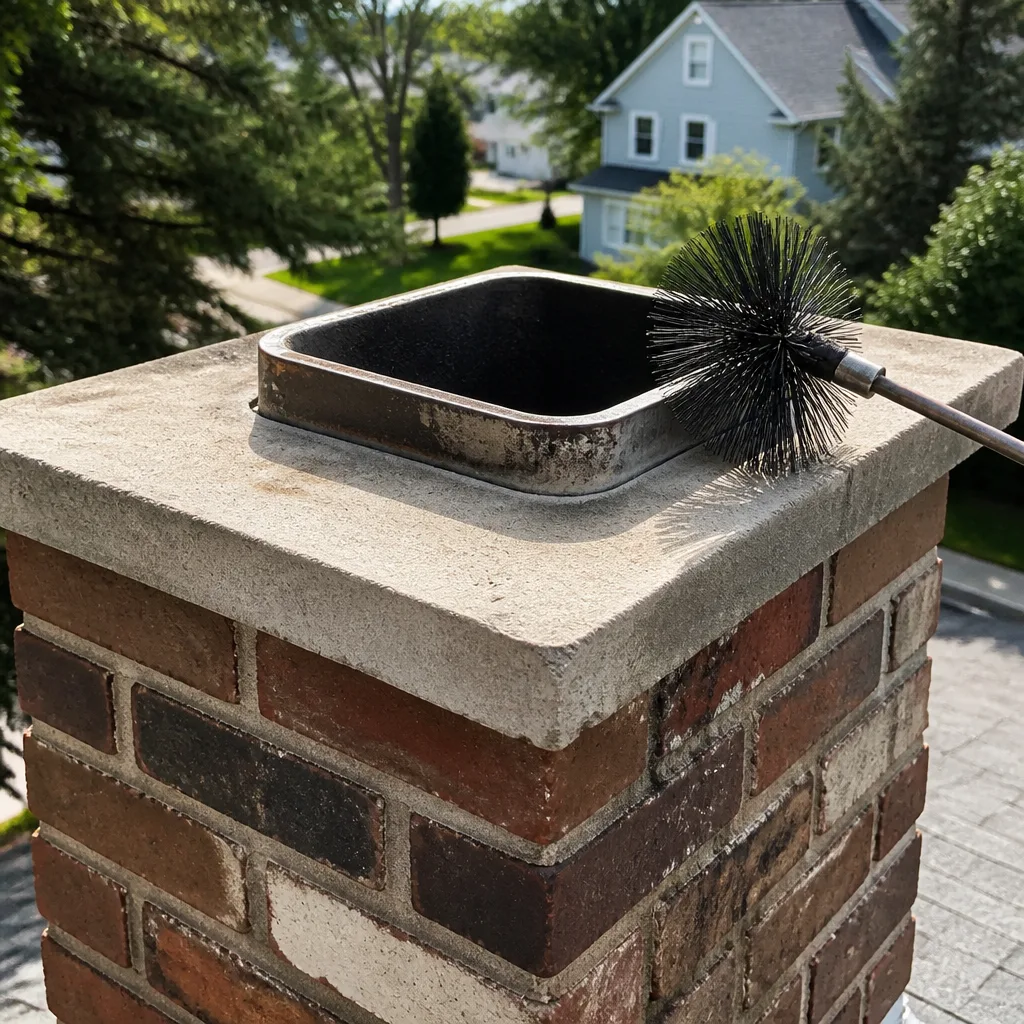 Sweep & inspection
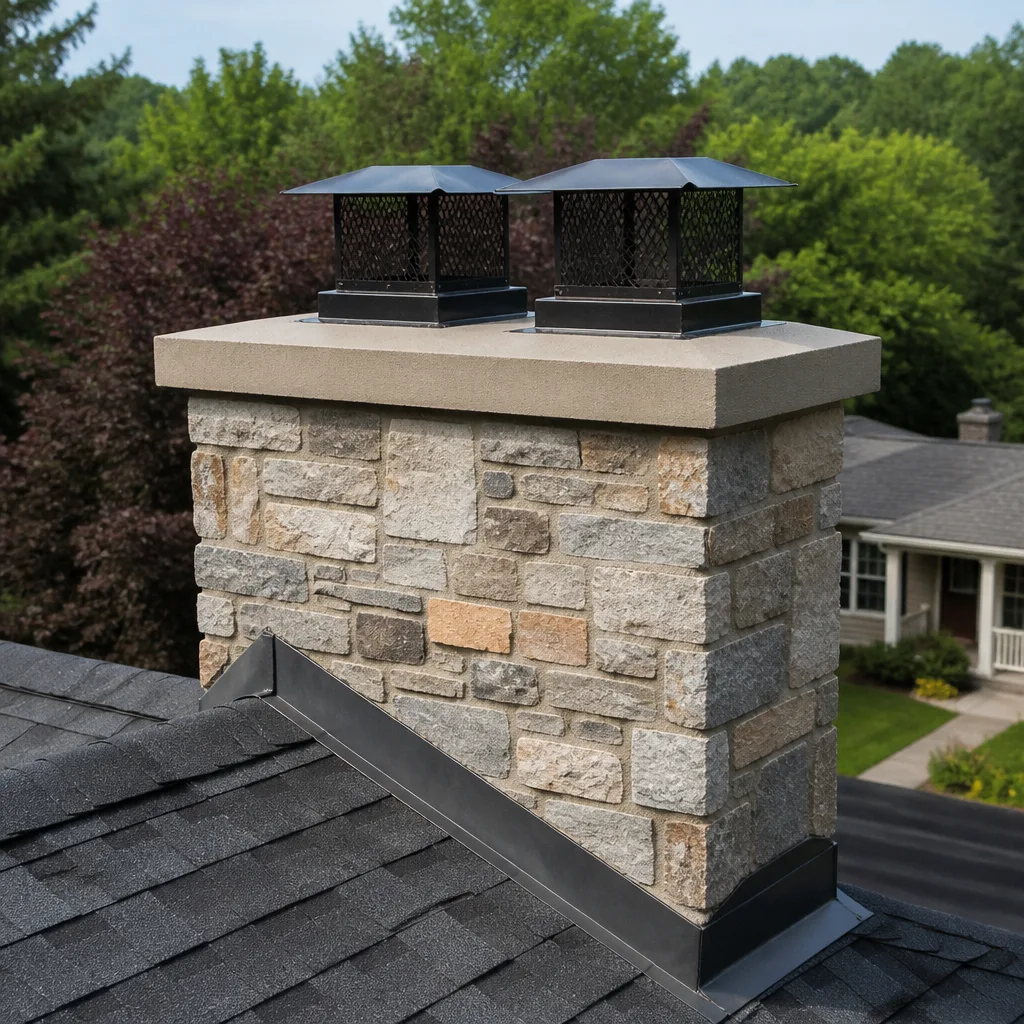 Caps & crowns
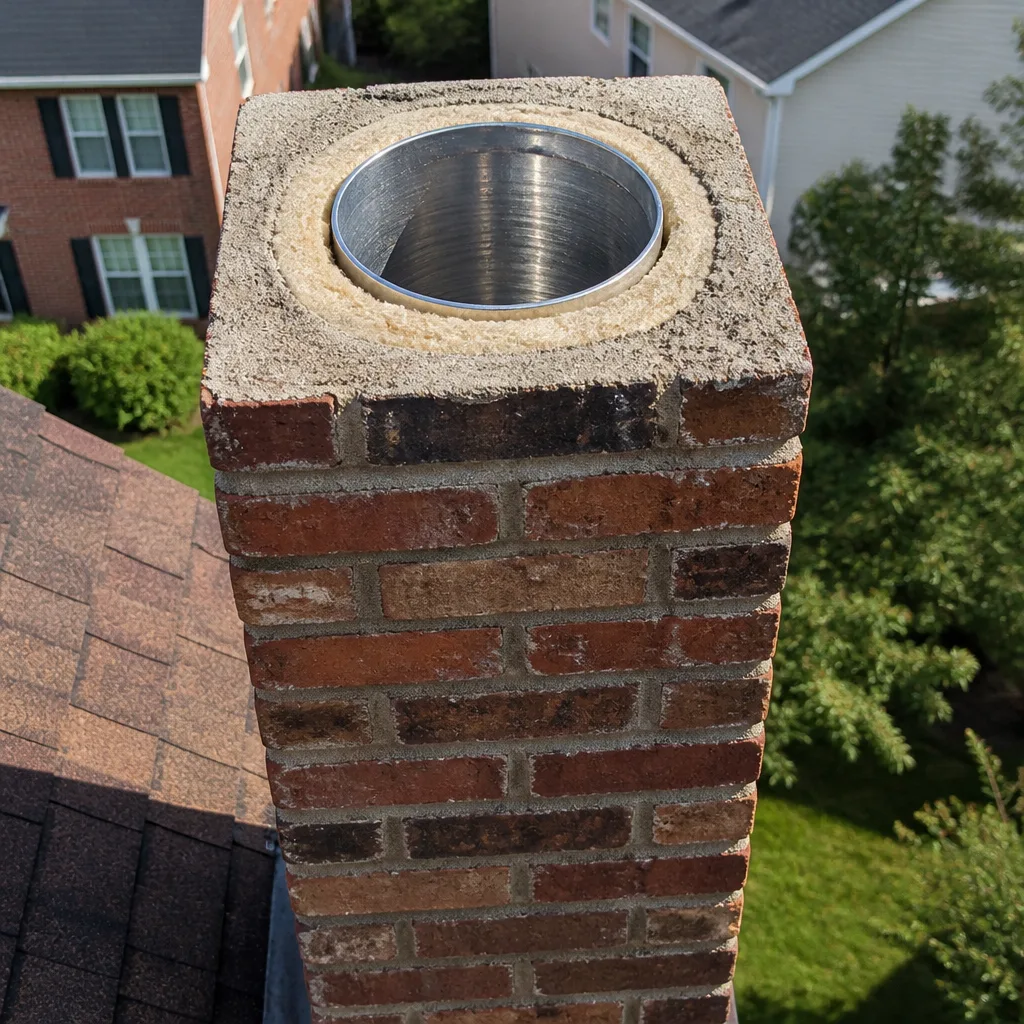 Flue relining
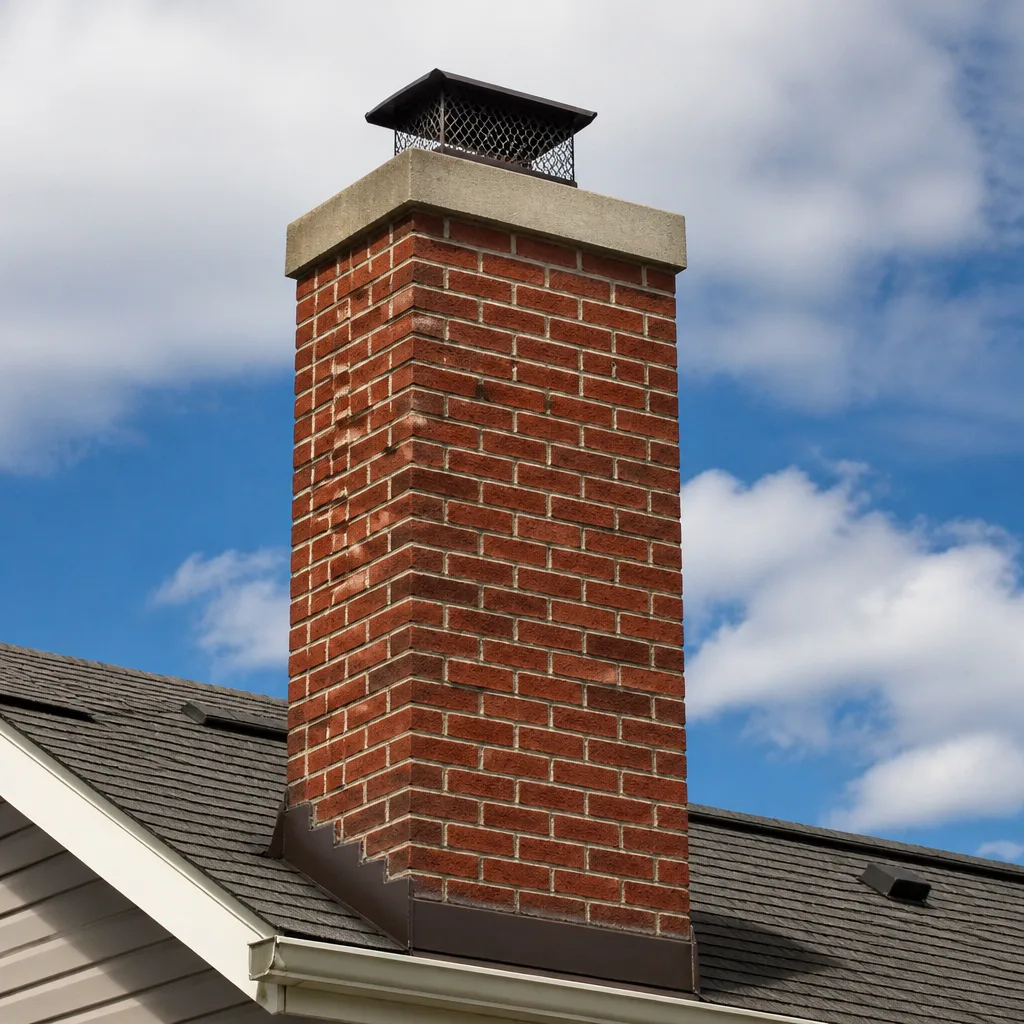 Masonry repair
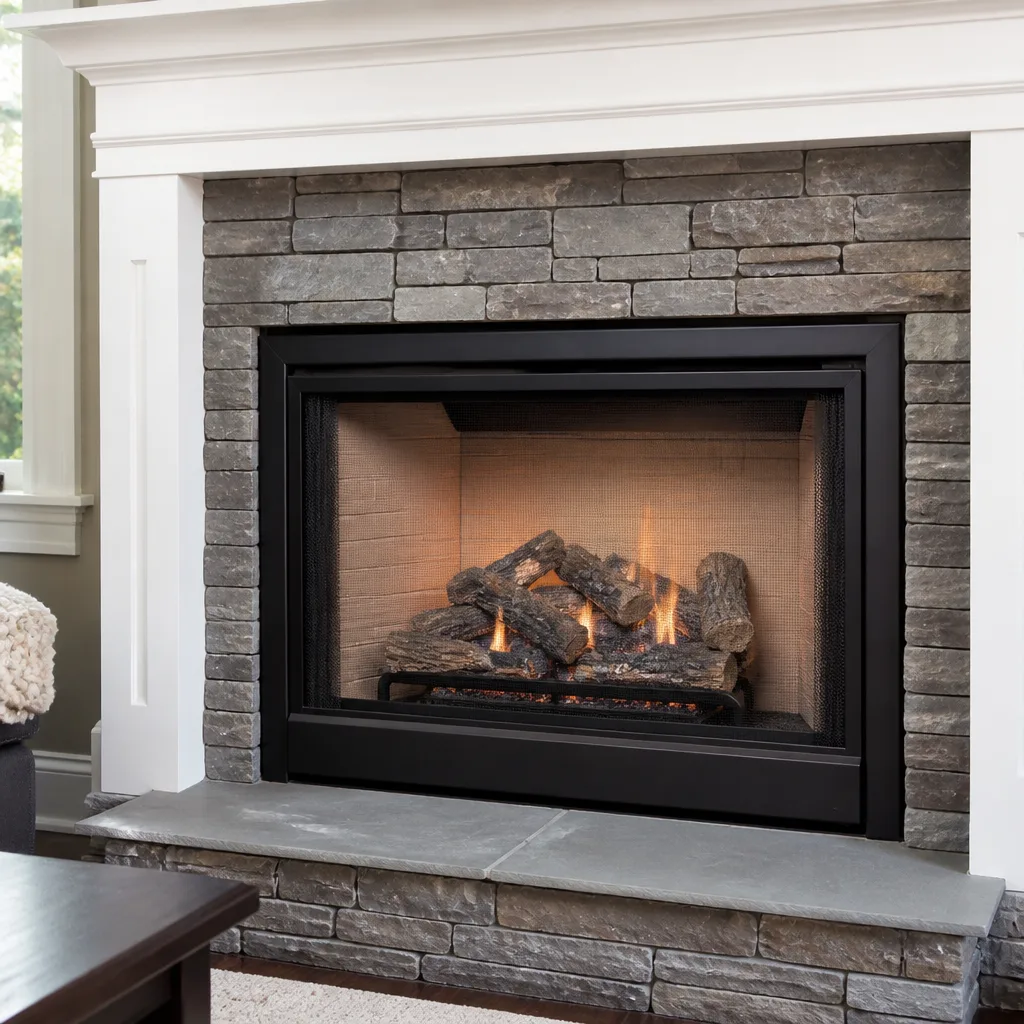 Gas fireplace service
Level 1 sweep and inspection to the NFPA 211 annual standard - flue, crown, cap, and flashing checked and photographed
Chimney sweep logs do not sweep chimneys. They loosen some creosote - which then falls where a brush and vacuum still have to collect it.
The Complete Guide to Chimney Cleaning in Arvada
Most chimney advice you’ll find online was written somewhere near sea level, and it shows. Arvada sits at over 5,400 feet, where lower air pressure changes how wood burns, how completely it combusts, and how fast creosote moves from a soft, brushable crust into the hardened, glazed stage that’s genuinely difficult to remove. A cleaning checklist built for a house in Ohio or Texas can miss what’s actually happening inside a fireplace here. This guide maps the full service arc for Arvada chimneys specifically: what our high, dry climate does to your flue, how the three inspection levels differ and when each one applies in Colorado, and what a real closed-loop visit looks like from sweep to documented repair. By the end you’ll know what to ask for, what to expect, and when work can safely wait.
Quick Answer
Chimney cleaning in Arvada means brushing soot and creosote from the flue and firebox, then inspecting the full system so you know what condition it’s in, not just that it’s cleaner. Because Arvada’s elevation and dry air change how wood burns, most homes here benefit from an annual sweep and inspection before the heating season starts. A proper visit pairs the cleaning with a documented inspection, and if repairs are needed, the same provider can complete them with professional-grade materials rather than handing you a list and leaving.
Styles & brands we work with
- Sweep & inspection
- Caps & crowns
- Flue relining
- Masonry repair
- Gas fireplace service
Table of Contents
- Why Arvada’s Elevation Changes How Your Chimney Ages
- Creosote in a Dry, High-Altitude Climate
- Level 1, 2, and 3 Inspections: What Each One Covers
- The Closed Loop: Sweep, Inspect, Document, Repair
- What a Full-Service Visit Actually Looks Like
- Why Product Choice Matters in Arvada Repairs
- How Often Should an Arvada Chimney Be Cleaned?
- What Chimney Cleaning Costs in Arvada
Why Arvada’s Elevation Changes How Your Chimney Ages
At 5,400 feet and change, the air is thinner, and thinner air holds less oxygen per cubic foot. A wood fire needs oxygen to burn hot and clean, so a fire that would roar in a lowland fireplace can smolder here if the draft isn’t right or the wood is marginal. Smoldering fires produce more creosote than hot ones. That single fact reshapes almost everything about chimney care in Arvada, because creosote is the fuel behind most chimney fires, and the rate at which it builds depends on how completely your wood burns.
Lower air pressure also affects draft itself. A chimney works because warm exhaust rises and pulls fresh air in behind it. At altitude, that pressure difference is smaller, so draft is generally weaker. Weak draft means smoke lingers longer in the flue, deposits more material on the walls, and gives creosote more time to condense. Homeowners sometimes notice this as a fireplace that’s fussier about damp days or colder snaps, or one that smokes a little on startup. It’s not imagination. The stack effect in an Arvada home behaves differently than it does at 500 feet.
Then there’s the climate. Arvada is dry, and the Front Range swings hard between warm afternoons and cold nights. Masonry expands and contracts with those swings. Over seasons, that movement opens hairline cracks in mortar joints and in the clay tile liners many older Arvada homes still have. A crack you can’t see from the firebox can let heat reach combustible framing or let carbon monoxide escape into the house. This is exactly why cleaning alone isn’t the whole job here. The flue needs to be looked at, not just swept.
What this means in practice
- Wood that’s not fully seasoned burns cooler and dirtier at altitude, so dry, split, covered firewood matters more here than most guides suggest.
- Weak draft means more smoke contact with flue walls, which speeds creosote buildup.
- Wide temperature swings stress masonry, so cracks and loose joints are a real inspection concern, not a theoretical one.
- Annual evaluation before the heating season is the practical baseline for most Arvada homes.
Creosote in a Dry, High-Altitude Climate
Creosote forms in stages, and knowing the stages helps you understand why a sweep is sometimes quick and sometimes involves real work. It’s also the reason a chimney that “looked fine” two seasons ago can be a problem now.
Stage one is a soft, flaky soot that brushes off easily. Stage two is a crusty, brittle deposit that takes more effort but still comes loose with the right brushes. Stage three is glazed, hardened creosote that bonds to the flue wall like varnish and won’t respond to ordinary brushing. Stage three is the one that genuinely worries a chimney professional, because it’s highly combustible and it’s stubborn. In a high, dry climate with weaker draft, the path from stage one toward stage three can be faster than in a lowland home, especially with cool or wet wood.
How creosote builds in Arvada
- Soot and unburned gases rise off the fire and cool as they travel up the flue.
- They condense on the relatively cooler flue walls, especially in the upper section and around any offset.
- A hot, clean fire leaves less behind. A smoldering fire leaves much more.
- What deposits early brushes away. What stays and reheats over repeated fires hardens into glazed creosote.
- The glazed layer insulates the flue wall, which makes the next fire burn a little cooler on the flue surface, which encourages more condensation. The cycle self-reinforces.
One misconception worth correcting: a dry climate does not mean dry wood. Firewood here holds moisture from wherever and whenever it was cut, and it needs time and airflow to season. Burning marginal wood is the fastest way to speed creosote buildup, no matter the altitude. Seasoned wood, a hot fire, and a flue that isn’t restricted by a heavy deposit all work together.
Because of that, a chimney sweep isn’t just housekeeping. It’s a check on how your fire has been burning. When we see glazed creosote in an Arvada flue, the honest follow-up is a conversation about draft, wood, and the condition of the liner, not a second brushing next year and the same result.
Level 1, 2, and 3 Inspections: What Each One Covers
The chimney industry uses three inspection levels, and knowing which one applies to your situation saves time and money. Here’s how they break down, with notes on when each tends to come up in Arvada.
Level 1 inspection
A visual check of readily accessible parts of the chimney and venting, done without special tools. It’s the right level for a system that’s already known and unchanged: you’ve kept up with maintenance and nothing has shifted. This is what normally accompanies an annual sweep.
Level 2 inspection
Everything in a Level 1, plus access to parts of the system that aren’t readily reachable: attics, crawl spaces, and the flue interior via a camera. A Level 2 is what’s typically expected when a property changes hands, when a home inspector has flagged the chimney, when there’s been a chimney fire, when you’ve changed appliance types, or when there’s been a change to the system. For real estate transactions and insurance requests in Arvada, a Level 2 with photographic documentation is the standard you want, because the report needs to stand on its own for people who weren’t there.
Level 3 inspection
The most involved level, used when a Level 1 or 2 surfaces a specific concern that can only be resolved by opening up part of the chimney or accessing concealed areas. It’s not routine, and it’s done for a defined reason, not as a default.
Which level fits your situation
- Annual maintenance, unchanged system: Level 1 alongside the sweep.
- Buying or selling a home in Arvada: Level 2, with documented findings.
- Home inspection flagged the chimney: Level 2.
- Recent chimney fire, even a small one: Level 2.
- Switching fuel types or changing the appliance: Level 2.
- A concealed problem that needs opening up to diagnose: Level 3.
The point of matching the level to the situation is that you pay for the right amount of investigation. Over-specifying wastes money. Under-specifying misses the thing you needed to know.
The Closed Loop: Sweep, Inspect, Document, Repair
A “sweep and leave” visit is the single most common shortfall in chimney care, and it’s easy to see why. The cleaning itself looks like the service. But a cleaning without an inspection tells you nothing about the liner, the joints, the crown, or the smoke chamber. And an inspection that ends with a list of recommended repairs from a company that doesn’t do the repairs leaves you to find someone else, describe the problem second-hand, and trust that both contractors agree.
We built our service around closing that loop. One provider handles the sweep, the inspection, and the repair, so nothing gets lost between a report and the work. That matters in a place like Arvada, where the underlying issues tend to be specific: a cracked tile, a failing mortar joint, a crown that’s letting water in, or glazed creosote that needs addressing before a liner decision.
The closed-loop process, step by step
- Sweep. Brush the firebox, smoke chamber, and flue to clear soot and accessible creosote.
- Inspect. Check the flue, liner joints, smoke chamber, damper, firebox, crown, cap, and accessible exterior for condition and safety issues.
- Document. Photograph what we find so you can see it for yourself, not take it on faith.
- Explain. Name each issue in plain terms, what it means, and whether it needs work now or can safely wait.
- Repair. Complete the recommended repair with the right product for the job, sourcing through professional supply lines.
- Verify. Confirm the repair holds and document the finished result.
That third and fourth step carries a lot of weight. Nobody should be told they need significant liner or masonry work without being able to see the evidence that prompted the recommendation. If a finding can safely wait, we say so. That’s the difference between a service and a sales pitch, and it’s the reason you can trust the recommendations that come with real urgency.
Where the process leads to chimney repair, it leads because the inspection found a specific, photographable problem, not because a repair quota was met.
What a Full-Service Visit Actually Looks Like
Knowing the shape of a visit helps you plan the day and understand what you’re paying for. Here’s the general run of a full-service appointment in Arvada, without a clock-time promise attached to it.
Before we arrive
A fire should be out and cool, and the area around the hearth cleared so we have room to work. If you have documentation from a prior inspection or a home sale, having it on hand helps.
During the visit
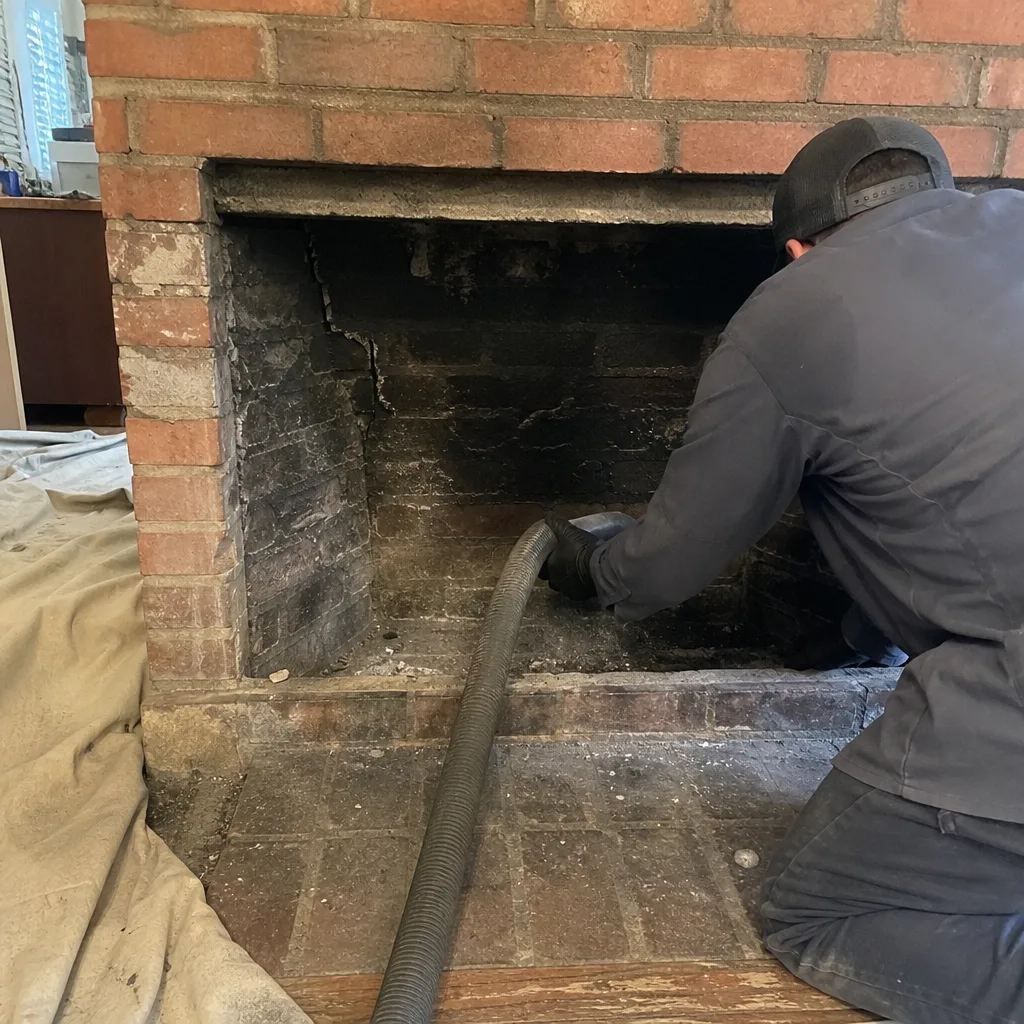
- Setup. The work area gets protected with drop cloths, and a vacuum keeps dust contained.
- Sweep. The firebox, smoke chamber, and flue get brushed. Tools depend on the flue type and the creosote stage.
- Inspect. We check the liner joints, smoke chamber, damper, firebox, crown, cap, and accessible exterior. A camera goes up the flue when the level of inspection calls for it.
- Document. Findings are photographed.
- Review. We walk you through what we found, what it means, and what needs attention versus what can wait.
Beyond the flue
A thorough visit isn’t only about the flue interior. The crown at the top of the chimney is a common failure point, and a cracked crown lets water into the masonry, which then freezes, expands, and does more damage through Colorado winters. The cap keeps water, debris, and animals out. The damper and smoke chamber affect how the fire draws. Checking these alongside the flue is what makes the inspection worth having, and it’s part of why we don’t treat cleaning as the finish line.
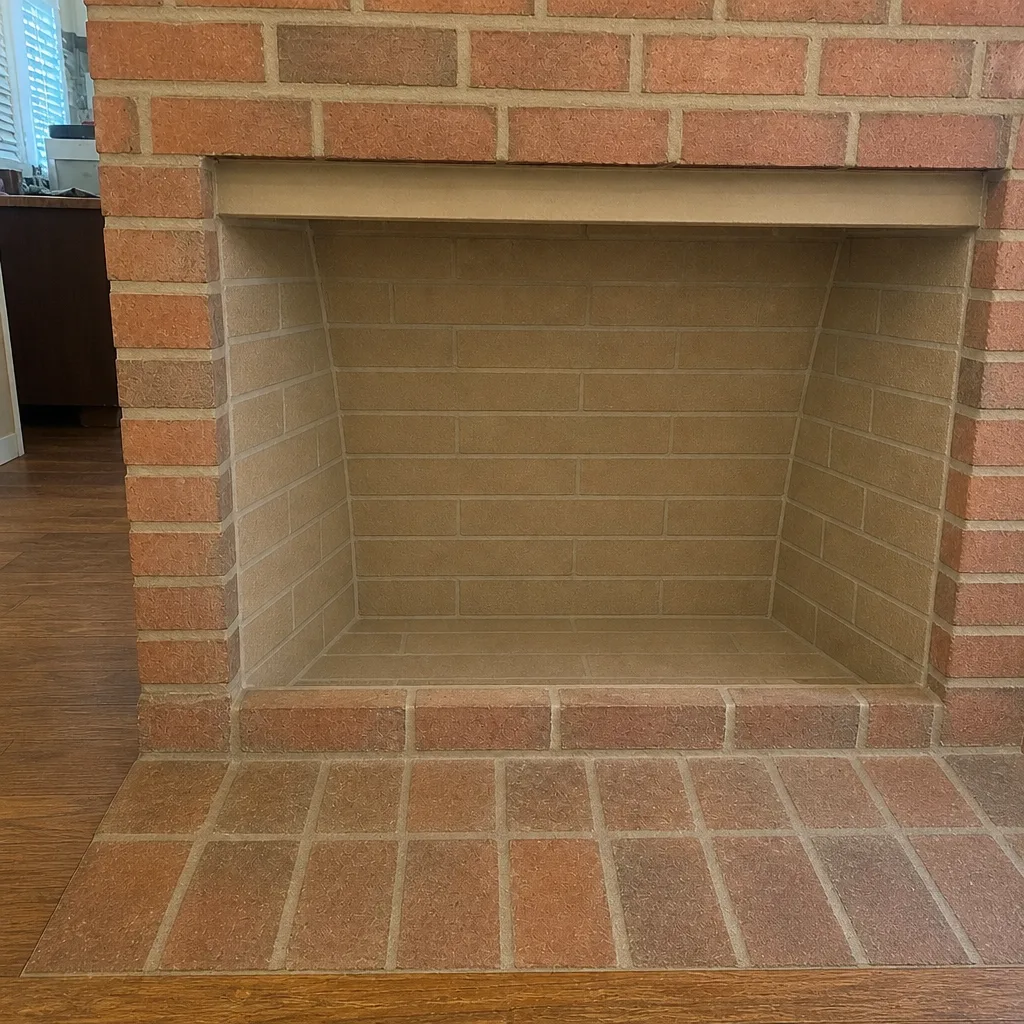
The cleaning gets the soot out. The inspection tells you what condition the system is in. When those happen together, you get a clean flue and a safe one, documented both ways.
Why Product Choice Matters in Arvada Repairs
When a chimney needs repair, the product matters as much as the labor. Generic substitutes from a big-box shelf may fit the gap in the moment, but they weren’t engineered for the temperatures and conditions a chimney sees, and they may not hold up through the freeze-thaw swings Arvada gets. We work with recognized industry brands: HeatShield, DuraFlex, Copperfield, Olympia Chimney, Famco, and Gelco. Two of them deserve a closer look because they come up often here.
HeatShield
HeatShield is a ceramic resurfacing and liner repair system designed to restore flue integrity where the liner is cracked or deteriorating but doesn’t call for a full replacement. It’s a named, tested product rather than an improvised patch, and it produces a documented, repeatable result. In practice, that means a repair you can point to and a flue that’s back to doing its job.
DuraFlex
DuraFlex offers flexible liner systems for relining work, giving a warrantable, code-compliant relining solution when a liner genuinely needs replacing. Flexible liners let us follow the existing flue path without unnecessary demolition, and the result is a documented, warrantable system rather than a temporary fix.
Copperfield and Olympia Chimney are professional supply chains that give us traceable, quality-controlled components, not whatever happens to be on the shelf locally. Famco and Gelco round out the mix where they’re the right fit for a given job. The point isn’t to name-drop brands. It’s that the product is matched to the problem, and the materials are the same professional-grade ones certified chimney professionals use nationwide.
Why this matters to a homeowner
A chimney repair is only as good as the material and the workmanship behind it. When the product is a proven system and the job is done by a company that also did the inspection, you’ve got a single accountable provider and a repair built to last, not patched to pass.
How Often Should an Arvada Chimney Be Cleaned?
For most homes, annual cleaning and inspection is the practical baseline, and in Arvada’s climate that’s a reasonable default. But “annual” is a floor, not a ceiling, and several factors can move the timing.
Clean sooner if any of these apply
- You burn a lot of fires through the season, or burn frequently on cool nights and mornings.
- You’ve noticed a heavy, glassy deposit when looking up the flue.
- Your wood has been less than fully seasoned.
- You’ve had a chimney fire, even a small one.
- You’re buying or selling a home and need a documented inspection.
- You’re heading into a new heating season and haven’t had the system looked at recently.
In a dry, high-altitude climate, the buildup rate depends heavily on how the wood burns. A household that uses seasoned wood and burns hot fires will build less creosote than one burning marginal wood and damping fires down. If you’re unsure where your chimney sits, the inspection tells you. That’s the useful part of a yearly visit: not just the clean, but the read on your system.
Before burning season
Late summer is the natural window. Arvada’s winters are long enough that a chimney checked before the season starts gives you a clean, inspected system before the first fire, and any needed repair has room to be completed ahead of the cold. It’s also a calmer time than the first cold snap, when everyone wants an appointment at once.
What Chimney Cleaning Costs in Arvada
Pricing varies with the flue, the creosote stage, and whether repairs come up, so a written estimate is the only way to know your exact number. That said, it helps to understand what drives the cost and how the service is structured.
What affects the price
- Flue type and length. A simple flue and a complex multi-flue chimney aren’t the same job.
- Creosote stage. Stage one and two brush out predictably. Stage three glazed creosote needs more work.
- Inspection level. A Level 1 alongside a sweep is simpler than a Level 2 with full camera documentation.
- Access. A roof that’s hard to reach or a chimney with a complicated crown can add time.
- Repairs. A cleaning doesn’t include liner or masonry work. If the inspection finds something, we quote it separately and explain whether it can safely wait.
How the estimate works
Estimates are free, and the price is set per job by the written estimate, so there are no surprises partway through. We don’t hand you a number for a repair before we’ve actually looked at the problem, because a repair quoted without evidence isn’t a repair quote, it’s a guess. If what we find can wait, we’ll tell you that, and if it needs attention now, we’ll show you why. Call (855) 508-5717 for an exact quote; estimates are free.
Common Mistakes to Avoid
- Treating the sweep as the whole job. If nobody inspects the liner, crown, and smoke chamber, you’ve cleaned a flue and learned nothing about the system. The clean is the start of the visit, not the end of it.
- Burning wet or green wood to stretch the supply. At 5,400 feet, a cool, smoldering fire deposits far more creosote than a hot one. Season your wood and keep it covered.
- Assuming a dry climate means wood stays dry. Arvada’s air is dry, but firewood needs airflow and time to season. A covered stack in the open beats a tarp-wrapped pile that traps moisture.
- Skipping the annual look because “it doesn’t get used much.” Low use is not the same as no inspection. Cracks and loose joints happen with temperature swings and time, not with how many fires you burned.
- Accepting a big repair quoted without seeing the evidence. You should be able to see the photo or the camera view that prompted a liner or masonry recommendation. If you can’t, ask for it before agreeing to the work.
- Letting a small issue ride into winter. A cracked crown or a hairline tile crack is manageable in the fall. Water in that crack through a Colorado freeze-thaw winter is a bigger job by spring.
- Coordinating two contractors for one problem. A sweep from one company and a repair from another leaves nobody accountable for the whole system. Keep it with one provider and one set of findings.
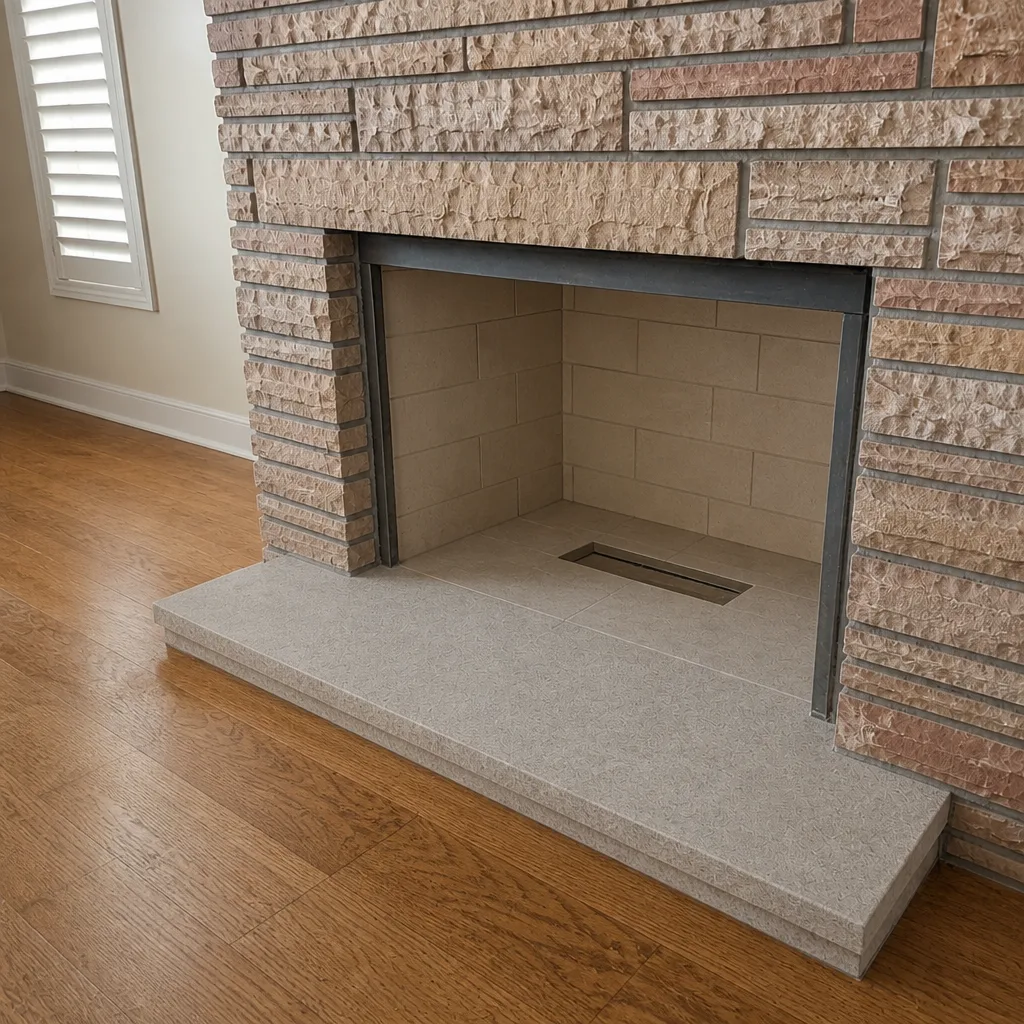
See the difference
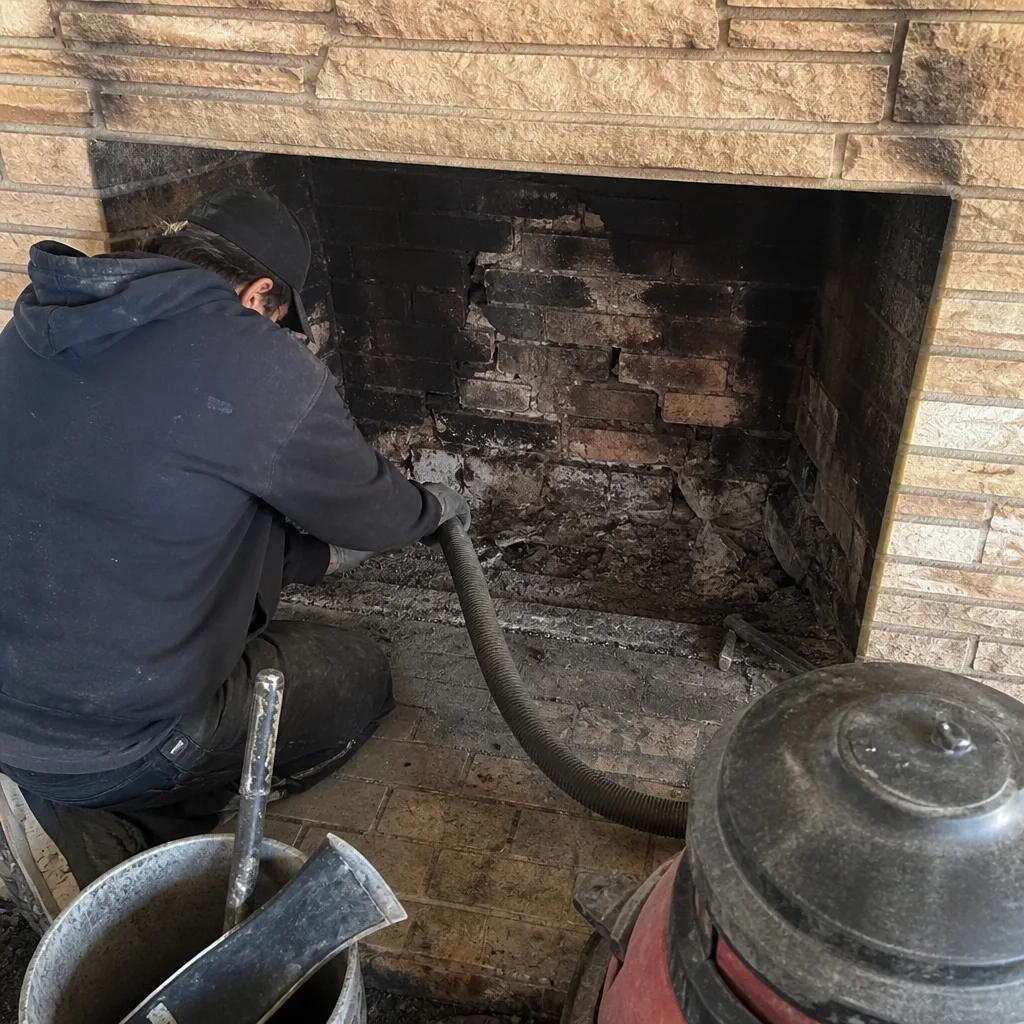 Before
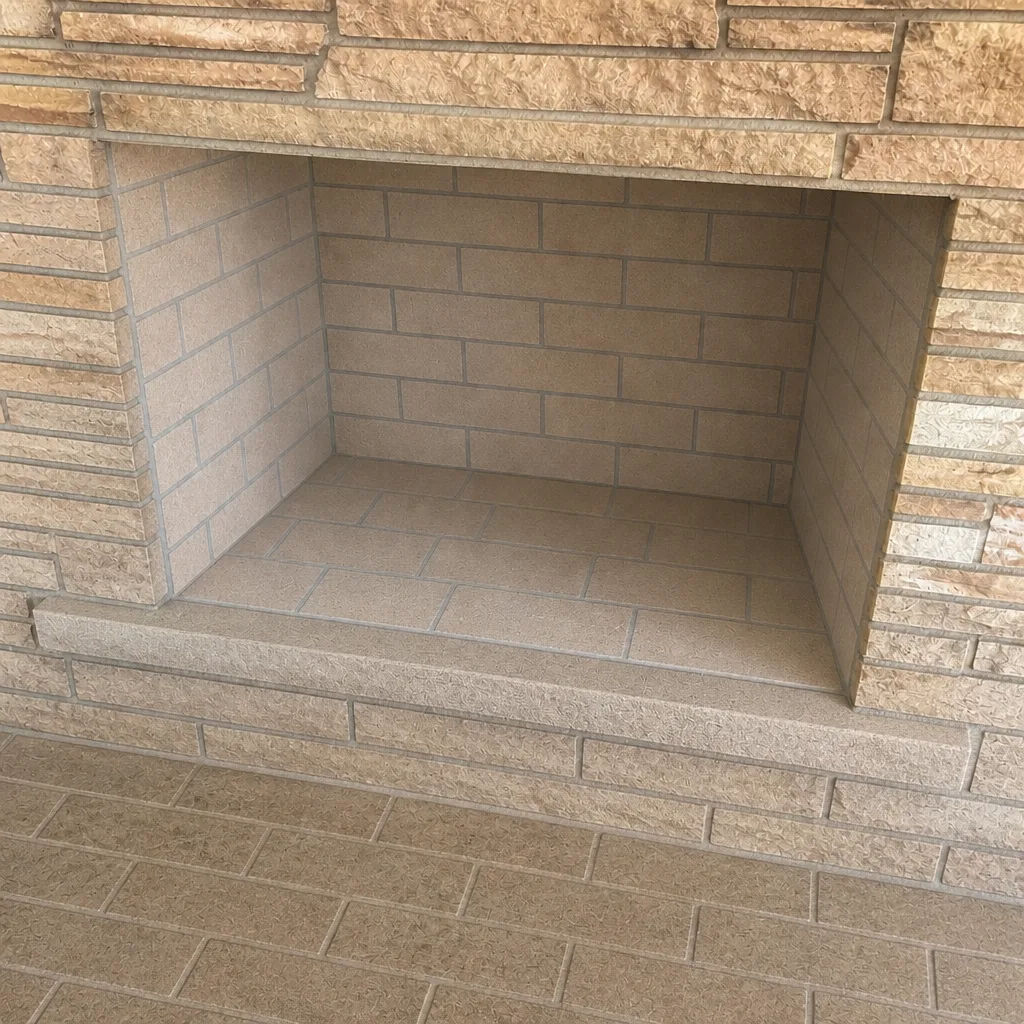 After
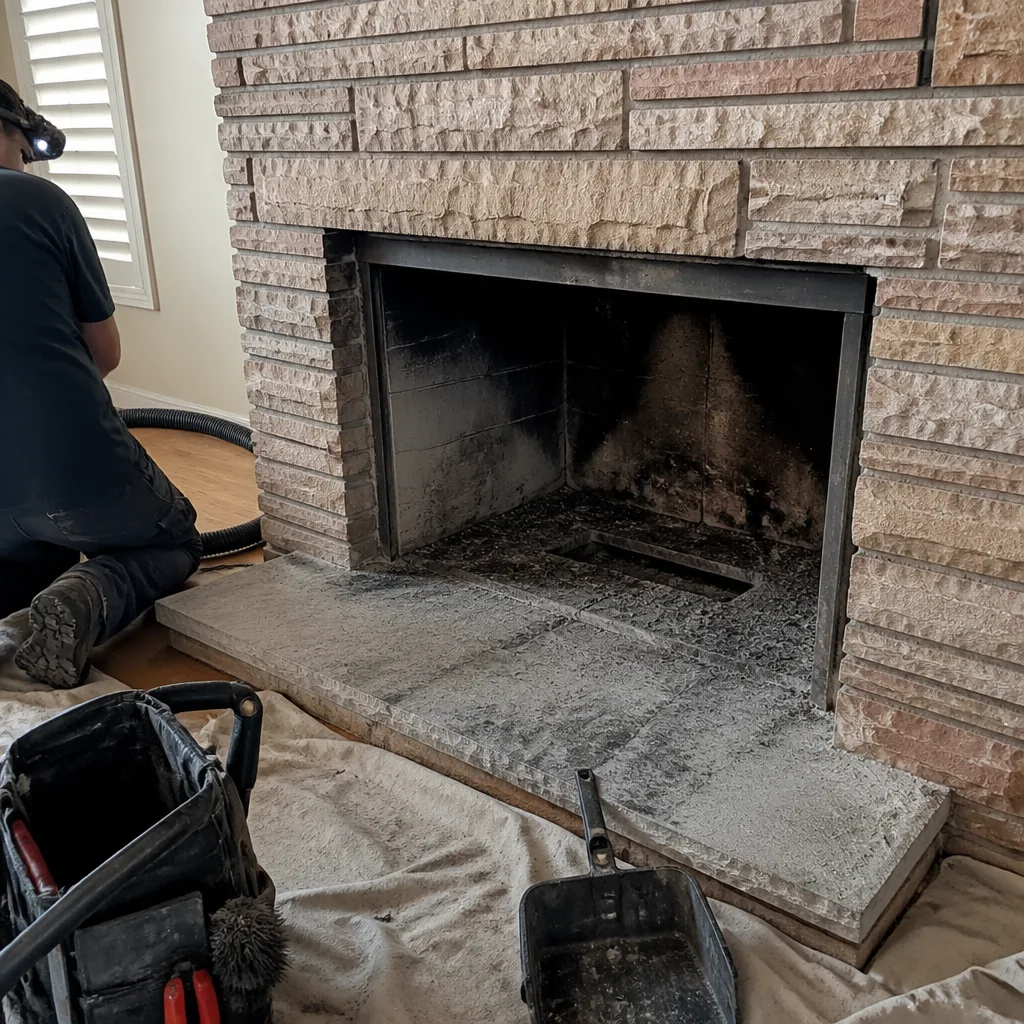 Before
 After
 Before
 After
When to Call a Professional
Bring in a professional when the job leaves brush-and-bucket territory. That includes any time you suspect glazed creosote, any time you see cracked or displaced liner tiles, any time there’s been a chimney fire even if the fire seemed to go out quickly, and any time you notice smoke backing into the room or a persistently weak draw. Safety is the reason to act rather than a sales tactic: creosote is combustible, and a damaged liner or joint can let combustion gases reach areas they shouldn’t. Gas or wood, high-tension components and concealed flue damage are not a DIY project, and a trained professional should do the inspection and any repair. Arvada Chimney Cleaning offers free estimates in Arvada; call (855) 508-5717.
Frequently Asked Questions
Chimney cleaning in Arvada is priced per job by a free written estimate, so the number depends on your flue, the creosote stage, and whether a Level 1 or Level 2 inspection is needed. What matters is what’s included: a sweep paired with a real inspection and documented findings. Call (855) 508-5717 for an exact quote; estimates are free.
Only if the inspection shows your existing liner can’t do its job safely. Cracks, gaps, and deteriorated joints are the usual reasons, and a flexible DuraFlex relining or a HeatShield resurfacing can restore integrity when the liner genuinely needs it. We show you the evidence first, and if the liner is sound, we’ll tell you that. Call (855) 508-5717 to book an inspection.
Annual cleaning and inspection is the practical baseline for most Arvada homes, and the high-altitude, dry climate makes the yearly read on your flue especially useful. If you burn a lot of fires or your wood has been marginal, clean sooner and don’t wait for a full season. Call (855) 508-5717 to schedule.
Skipping the sweep lets creosote build up unchecked, and at altitude the weaker draft means more smoke contact with the flue walls, which can speed the hardening toward glazed creosote. Skipping the inspection is the bigger risk, because it’s how a cracked tile or failing crown goes unnoticed. Neither is worth the wait. Call (855) 508-5717 for a free estimate.
Yes, a professional sweep protects the work area and uses a vacuum to keep soot contained, so the visit doesn’t leave your hearth dirty. You get a cleaner flue and a documented inspection when the job is done right. Call (855) 508-5717 to book.
Yes. At over 5,400 feet, weaker draft and lower oxygen per cubic foot mean fires burn less completely and flues build creosote faster than at low elevation, which is why the local climate shapes the whole service. A generic checklist misses that. Call (855) 508-5717 to book a sweep and inspection built for Arvada conditions.
The Bottom Line
Chimney cleaning in Arvada isn’t just about soot. It’s about a high, dry climate and wide temperature swings that stress masonry, weaker draft that speeds creosote formation, and a flue that needs to be inspected, not only swept. The right visit pairs cleaning with a documented inspection at the level your situation calls for, and when repairs come up, they’re completed with professional-grade materials like HeatShield and DuraFlex rather than improvised patches. One provider for the sweep, the inspection, and the repair means no handoffs and no gaps. Around here, contact Arvada Chimney Cleaning – we handle the full arc.
If you’re heading into the heating season with an unknown flue, or a home inspection in Arvada has flagged the chimney, the simplest next step is a call. Reach out and we’ll set up a sweep and inspection with a free estimate, show you what we find, and tell you plainly what needs work now and what can wait. Call (855) 508-5717 for a free estimate. We answer 24/7. Fast dispatch from 7am to 7pm, Sunday through Friday.
Written by the team at Arvada Chimney Cleaning.